
What to Expect With Ovitz Scleral Lenses: Step-by-Step From Scan to Final Vision
For many patients with keratoconus, corneal scarring, post-LASIK complications, or persistent ghosting and halos, standard glasses and even conventional scleral lenses may not completely solve their vision problems. That’s where Ovitz wavefront-guided technology offers another level of customization.
Using advanced wavefront measurements, Ovitz technology analyzes subtle optical imperfections known as higher-order aberrations (HOAs) to create a more personalized scleral lens design. At Raleigh Contact Lens Institute, this technology is combined with specialty scleral lenses to help eligible patients achieve sharper, more comfortable vision.
Patients traveling from surrounding communities for scleral lenses Wake Forest often choose this advanced evaluation when traditional vision correction has not delivered the clarity they need.
Step 1: Comprehensive Eye Examination
Every Ovitz fitting begins with a detailed eye examination. Your doctor reviews your vision history, current prescription, previous contact lens experience, and overall eye health.
Additional testing evaluates:
- Corneal shape
- Tear film quality
- Lens stability
- Higher-order aberration symptoms
- Previous eye surgeries or injuries
This thorough evaluation helps determine whether wavefront-guided scleral lenses are appropriate for your condition.
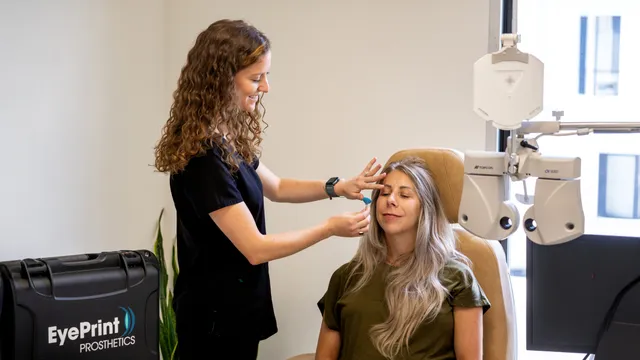
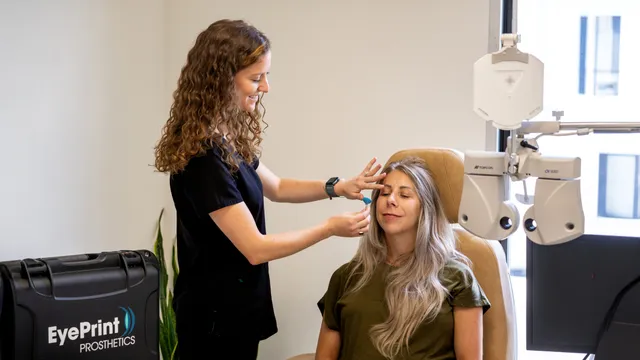
Step 2: Advanced OVITZ xwave Scan
Unlike a standard vision test, the OVITZ xwave aberrometer measures how light travels through the entire optical system of your eye.
The scan identifies higher-order aberrations that may contribute to:
- Ghosting
- Halos
- Glare
- Starbursts
- Double vision
- Reduced night vision
These tiny imperfections are often missed during routine eye exams but can significantly affect visual quality.
Patients considering Ovitz technology Raleigh often seek this advanced testing because their vision still feels “off” despite wearing glasses or specialty lenses.
Step 3: Data Analysis and Customized Lens Design
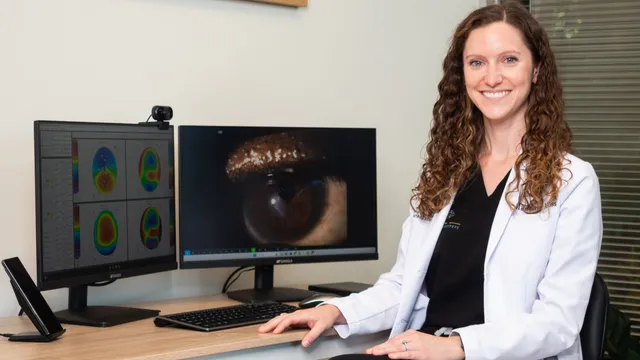
After your scan is complete, the wavefront data is carefully analyzed.
Rather than simply correcting nearsightedness or astigmatism, the customized design incorporates measurements that address your eye’s unique optical distortions.
According to Raleigh Contact Lens Institute, each OVITZ scan is reviewed by experienced clinicians or the Ovitz team to help optimize the final lens design.
Step 4: Specialty Scleral Lens Fitting
Once the custom design is complete, your doctor fits the scleral lens and evaluates:
- Lens alignment
- Corneal clearance
- Lens stability
- Comfort
- Initial vision quality
Small adjustments may be recommended to maximize both comfort and optical performance.
Patients searching for scleral lenses Chapel Hill frequently travel to specialty practices that have experience fitting these advanced customized lenses.
Step 5: Lens Dispensing and Training
When your lenses are ready, your appointment includes:
Lens insertion and removal training
Patients learn proper insertion and removal techniques to ensure safe daily wear.
Cleaning and care instructions
Proper cleaning and storage help maintain lens performance and long-term eye health.
Wearing schedule
Your doctor provides guidance on gradually increasing wear time as your eyes adapt.
Step 6: Follow-Up Visits
Follow-up appointments are an important part of the fitting process.
Your doctor evaluates:
- Vision quality
- Comfort
- Lens position
- Eye health
- Residual visual symptoms
If needed, additional refinements can be made to optimize the final result.
Who May Benefit From Ovitz Scleral Lenses?
Wavefront-guided scleral lenses may benefit patients with:
- Keratoconus
- Corneal scars
- Post-LASIK or RK complications
- Persistent glare or halos
- Ghost images
- Double vision
- Reduced night vision
- Higher-order aberrations
Not every patient requires Ovitz technology, but it may be an excellent option for individuals who continue experiencing visual distortions despite wearing traditional specialty lenses.
Why Choose Raleigh Contact Lens Institute?
Raleigh Contact Lens Institute focuses exclusively on specialty contact lenses and myopia management. The practice utilizes advanced technologies including the OVITZ xwave aberrometer, EyePrintPRO, Pentacam AXL Wave, and Optovue Solix OCT to evaluate and design customized lenses for complex eye conditions. New patient evaluations typically include 90–120 minutes of one-on-one doctor time for a comprehensive assessment.
Patients from throughout North Carolina—including those seeking scleral lenses Wake Forest, scleral lenses Chapel Hill, and nearby communities—often travel for this specialized level of care.
Conclusion
Ovitz wavefront-guided scleral lenses represent an advanced option for patients whose vision problems extend beyond a standard prescription. From detailed wavefront scanning to customized lens design and follow-up optimization, every step focuses on improving visual quality and comfort.
If you continue to experience ghosting, halos, glare, or double vision despite wearing specialty lenses, ask whether Ovitz technology Raleigh may be appropriate for your specific visual needs.
Frequently Asked Questions
1. What are Ovitz scleral lenses?
Ovitz scleral lenses are specialty contact lenses designed using advanced wavefront-guided technology to correct not only standard vision errors but also higher-order aberrations that can cause ghosting, halos, glare, and reduced visual quality.
2. How does Ovitz technology work?
Ovitz technology Raleigh uses a wavefront aberrometer to measure tiny optical imperfections throughout the eye. These measurements help create a customized scleral lens designed specifically for your unique vision needs.
3. Who is a good candidate for Ovitz scleral lenses?
Patients with keratoconus, irregular corneas, post-LASIK complications, corneal scarring, or persistent ghosting and halos despite wearing specialty lenses may benefit from an Ovitz evaluation.
4. What happens during the Ovitz scanning process?
The scan is quick and non-invasive. It captures detailed information about how light passes through your eye, allowing your specialist to identify higher-order aberrations that are not detected during a standard eye exam.
5. Can Ovitz scleral lenses help with ghosting and double vision?
For many patients, Ovitz-guided scleral lenses may reduce symptoms such as ghosting, halos, glare, and certain types of double vision caused by higher-order aberrations. Your eye doctor can determine whether this technology is appropriate for your condition.
6. How long does the fitting process take?
The complete fitting process may require several appointments. It typically includes a comprehensive eye examination, advanced wavefront scanning, custom lens design, lens fitting, and follow-up visits to fine-tune comfort and vision.
7. Are Ovitz scleral lenses comfortable?
Yes. Since scleral lenses rest on the sclera instead of the cornea, many patients find them comfortable for extended daily wear after a short adjustment period.
8. Can patients outside Raleigh receive Ovitz scleral lenses?
Yes. Many patients travel from surrounding communities seeking scleral lenses Wake Forest and other specialty lens services because advanced customization and experienced fitting can make a significant difference in visual outcomes.
9. Why are follow-up visits important after receiving Ovitz scleral lenses?
Follow-up appointments allow your specialist to evaluate lens fit, vision quality, eye health, and comfort. If necessary, small adjustments can be made to optimize your results.
10. Where can I schedule an Ovitz scleral lens consultation?
If you’re interested in Ovitz technology Raleigh or are looking for scleral lenses Chapel Hill and nearby areas, you can schedule a comprehensive specialty contact lens evaluation with Raleigh Contact Lens Institute to determine whether wavefront-guided scleral lenses are right for you.
Looking for Clearer, More Comfortable Vision?
Whether you suffer from keratoconus, post-surgical corneal irregularities, severe dry eye, or are seeking pediatric myopia control, our doctors have the diagnostic technology and expertise to find the right solution for your eyes.