Raleigh’s Dedicated Keratoconus Specialty Clinic

Clear Vision for Those With Keratoconus

Our office was established to provide exceptional, compassionate care for keratoconus, and the majority of our patients have this disease.

  • 75%+ of our patients come to us specifically for keratoconus management
  • 240,000 elevation data points per scan to engineer customized scleral lenses
  • 2 full hours of one-on-one time with Dr. Madison Moss at your initial exam
Prefer to speak with us directly? (919) 850-5910

Contact a Keratoconus Specialist

Fill out the info below to schedule a call with a member of our team who specializes in keratoconus.

75%
Our Patients With Keratoconus

The overwhelming majority of our daily caseload is dedicated solely to irregular cornea rehabilitation.

240,000
Data Points to Design the Best Lens

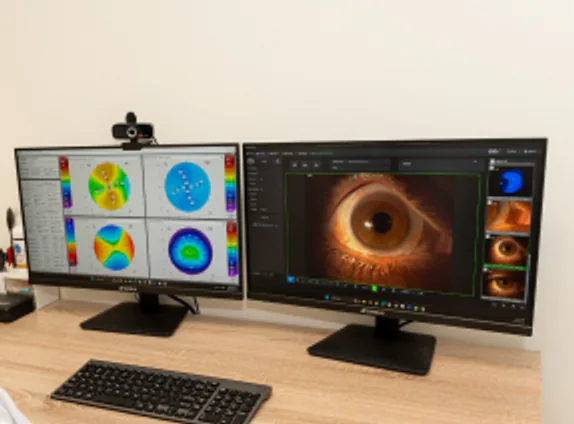
High-resolution Scheimpflug elevation tomography maps each unique corneal micro-contour.

1,000s
of Satisfied Keratoconus Patients

Patients travel across North Carolina, Virginia, and nationwide to achieve comfortable, crystal-clear optics.

Dedicated Optometric Excellence

The Keratoconus Specialists in Raleigh

Around 75% of patients at The Raleigh Contact Lens Institute have keratoconus, a condition that is one of our primary focuses, setting us apart as a highly unique practice.

The main focus of our office is providing vision solutions for keratoconus, which has led Dr. Madison Moss to develop a deep expertise in maximizing patients’ vision and comfort in contact lenses. This includes maximizing long-term vision and ocular health by closely monitoring for potential progression with advanced technology.

If you have questions on keratoconus, we can be reached at (919) 850-5910 or hello@raleighcontactlens.com.

Specialized Medical Devices & Doctors

Doctors who specialize in keratoconus, paired with advanced medical devices engineered specifically to treat corneal ectasia.

Unrushed 2-Hour Comprehensive Exams

Initial consultations are ~2 hours of dedicated one-on-one time with your doctor to explore every treatment avenue.

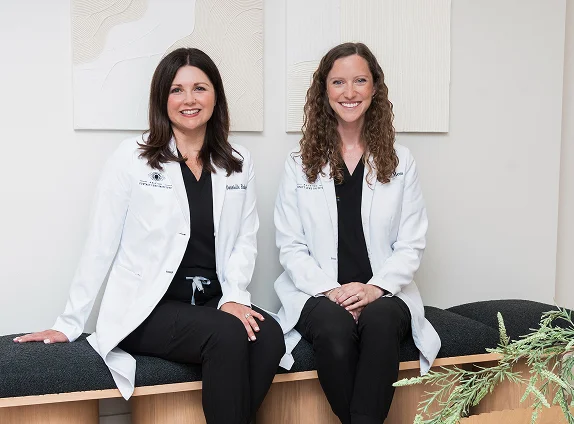
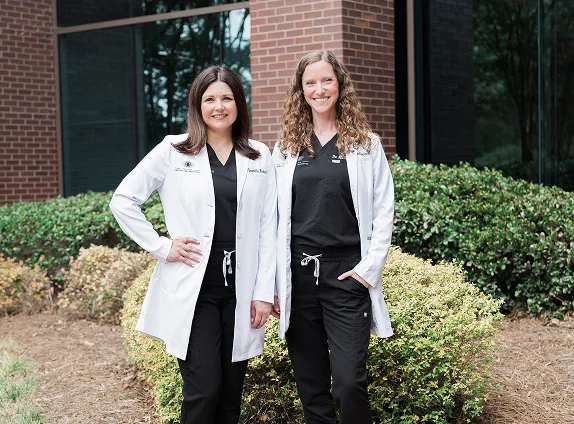
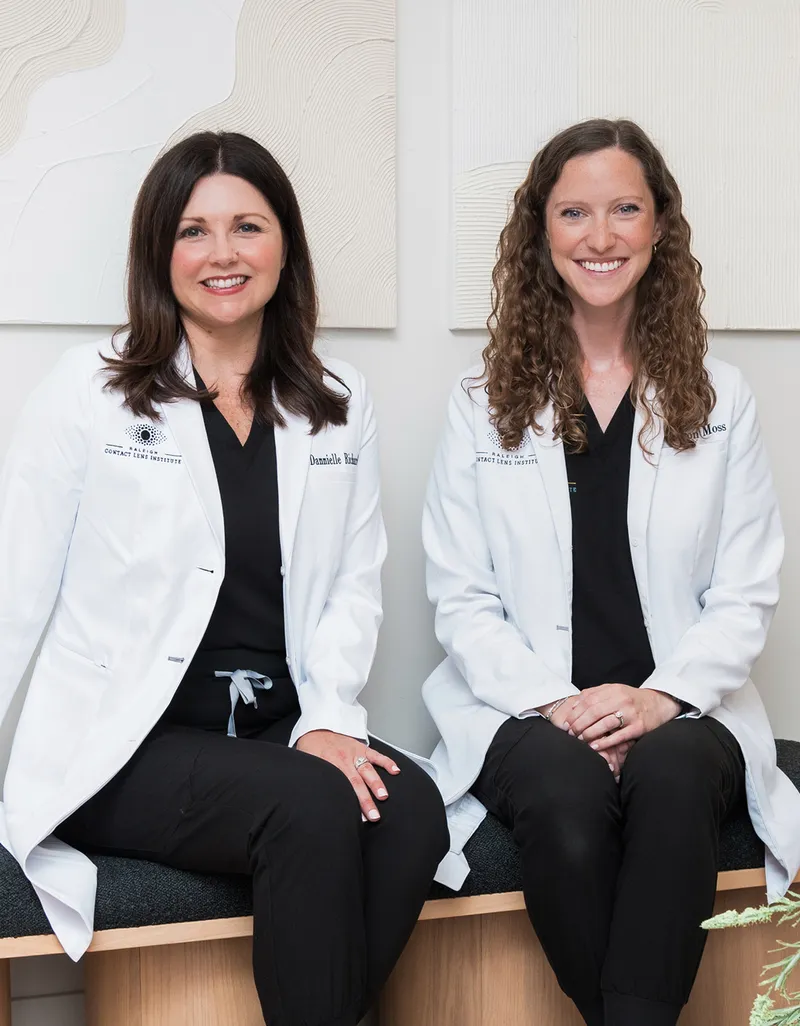
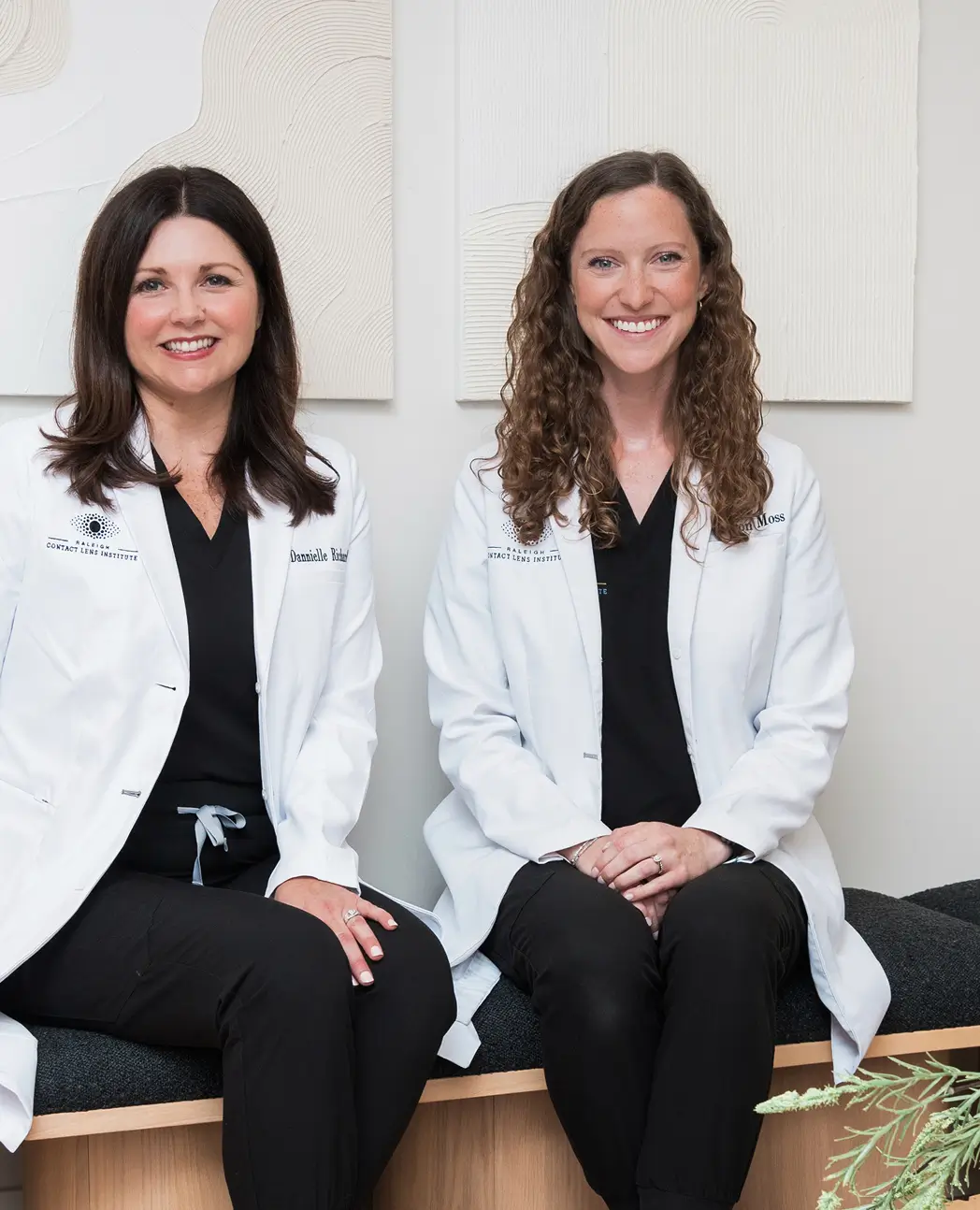
Dr. Madison Moss and Dr. Dannielle Richard, Keratoconus Specialists at The Raleigh Contact Lens Institute

Looking for More Information on Keratoconus?

Explore Clinical Treatment Options

Clinical Understanding of Keratoconus and Scleral Lenses

What is Keratoconus?

Keratoconus is an ocular condition in which the cornea weakens and acquires an irregular conical shape. This is accompanied by thinning of the central or paracentral cornea, resulting in corneal curvature imperfections (irregular astigmatism) that become impossible to correct with standard eyeglasses or conventional soft contact lenses.

Keratoconus usually affects both eyes, though often with significant asymmetry. Many patients only notice impaired vision once their stronger eye begins to change, by which time the condition may have already caused severe visual distortion in the fellow eye. Keratoconus typically emerges in the late teens or early twenties, affecting as many as 1 in 500 individuals.

Early stages frequently go undetected unless advanced corneal tomography scans of the eye’s front and back surfaces are performed. While mild cases might temporarily tolerate glasses, moderate-to-advanced keratoconus requires specialty optics to restore true clarity.
Specialty Contact Lenses as a Treatment Option

While there is currently no cure for keratoconus, The Raleigh Contact Lens Institute offers proven, state-of-the-art visual rehabilitation options. For the vast majority of patients, custom scleral contact lenses represent the gold standard in vision and comfort.

Scleral lenses are designed to “vault” completely over the irregular cornea, resting gently on the insensitive sclera (the white of the eye). Because the lens avoids touching the corneal surface entirely, wearers experience immediate comfort without the painful friction common with older small corneal GP lenses.

The liquid fluid reservoir between the lens and your cornea masks corneal distortions, neutralizing astigmatism and higher-order aberrations. Our clinic utilizes technology capturing up to 240,000 unique data points to engineer a 100% bespoke optical fit for your eye.

What is Corneal Cross-Linking (CXL)?

Corneal cross-linking (CXL) is a minimally invasive medical procedure that uses riboflavin (vitamin B2) drops activated by ultraviolet light to stiffen and strengthen collagen bonds within the corneal stroma.

While CXL is vital for stopping the progression of keratoconus and preventing further loss of corneal integrity, it does not reshape the cornea or eliminate optical distortions. Consequently, patients almost always still require specialty scleral contact lenses after cross-linking to achieve clear vision.

A Cross-Linking Evaluation is a routine assessment we perform to determine whether CXL is indicated. Area eye doctors frequently refer patients to our office because we are equipped with specialized tomography that detects the earliest micron-level signs of corneal ectasia progression.

Does Keratoconus Progress Over Time?

Keratoconus typically manifests during puberty or early adulthood (ages 10 to 25) and tends to progress steadily into a patient’s 30s or 40s. Some individuals experience rapid progression over months, while others progress gradually over years.

While the progression of keratoconus usually slows down or stabilizes around age 40, this timeline varies. Left unmonitored, unchecked progression can lead to severe corneal thinning, scarring, acute hydrops, and the eventual need for invasive corneal transplant surgery (PK/DALK).

Regular diagnostic imaging with our Oculus Pentacam AXL Wave allows us to compare serial elevation maps over time, catching subtle shifts immediately and protecting your lifetime visual potential.

Unrivaled Keratoconus Expertise

Why The Raleigh Contact Lens Institute for Keratoconus Treatment?

Our clinic was purpose-built from the ground up to solve complex corneal diseases that standard optical practices cannot manage.

The Team

The Team

The team at The Raleigh Contact Lens Institute are nationally recognized experts in managing keratoconus, with roughly 75% of our entire patient base receiving treatment for this specific condition.

Advanced Technology

Advanced Technology

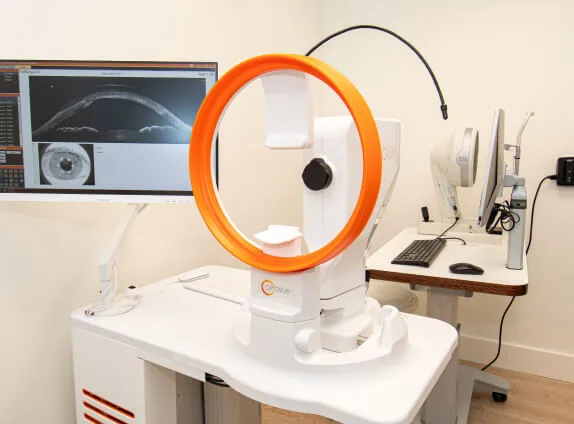
Our office is one of a select few practices in the United States equipped with the Oculus Pentacam AXL Wave and Optovue Solix OCT, providing unmatched precision in analyzing and monitoring corneal ectasia.

Unlimited Answers

Unlimited Answers

We schedule ample time for every consultation (~2 hours for initial exams). You will never be rushed through an appointment, and every question you have about your eyes will be answered in detail.

The Keratoconus Specialists

The Keratoconus Specialists

Roughly 75% of our patients come to us specifically for keratoconus management. There are few (if any) optometric practices nationwide that see a higher percentage of keratoconus patients as we do.

Access to the Doctor

Access to the Doctor

Dr. Madison Moss and our clinical team remain accessible to answer your questions after your exam, ensuring continuous guidance throughout your fitting process and long-term corneal health.

Affordability & Financing

Affordability & Financing

We keep our overhead focused strictly on high-impact diagnostic instrumentation to offer competitive, transparent pricing. We offer flexible monthly payment options through Cherry™ and accept HSA & FSA funds.

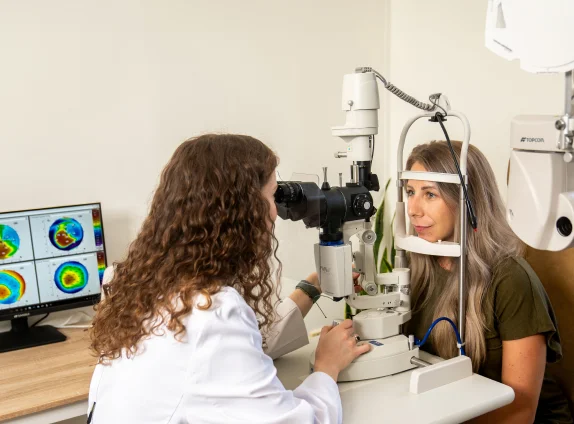
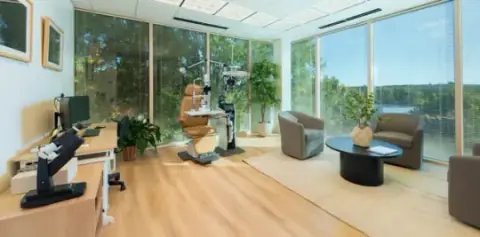
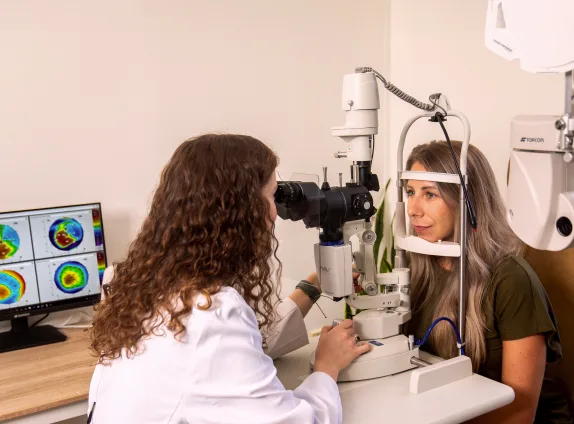
Dr. Madison Moss conducting a clinical keratoconus consultation at The Raleigh Contact Lens Institute
Comprehensive Care Model

Summary: Life-Changing Vision is Within Reach

Our doctors are nationally recognized for their expertise in utilizing specialty contact lenses to help individuals manage their keratoconus and reclaim their visual independence.

Scleral lenses are one potential option for managing keratoconus, and during your 2-hour initial comprehensive consultation, the doctor will thoroughly evaluate your cornea and discuss all personalized options for your eyes.

Whether you were recently diagnosed with keratoconus, have struggled with uncomfortable lenses in the past, or require an evaluation for cross-linking, our specialized team is ready to assist you.

Ready to speak with our clinical team? Call us at (919) 850-5910 or send an email to hello@raleighcontactlens.com.
Request a Consultation

The Keratoconus Experts in Raleigh

Certified in leading custom scleral, wavefront-guided, and ocular surface prosthetic technologies:

Specialty Lens Laboratory Certification 1
Specialty Lens Laboratory Certification 2
Specialty Lens Laboratory Certification 3
Specialty Lens Laboratory Certification 4
Specialty Lens Laboratory Certification 5
Specialty Lens Laboratory Certification 6
Patient Testimonials

What Our Patients Think of Us

5.0
5 out of 5 stars
Verified Google Patient Reviews
G
Graham Barnes
Verified Review on Google

"Dr. Moss is fantastic! She works really hard to make sure you understand all of the information you need to and is a perfectionist when it comes to making sure your vision is the best it could possibly be. Follow up from Hope on the office side is really quick and they check in along the way to make sure things are still going well. I have kerataconus and have tried getting fitted for my lenses all over the triangle with no success, now I am seeing great and the lenses are comfortable. Would highly recommend Raleigh Contact to anyone out there!"

D
D'Angela Davis
Verified Review on Google

"I’ve visited numerous specialists for my keratoconus, but my experience with Dr. Moss was exceptional. She possesses extensive knowledge and genuinely cares about my eye health and concerns. With my condition, she’s the first person who makes me feel confident in my vision. I eagerly look forward to my appointments because my eyesight improves with each visit. I highly recommend Dr. Moss to anyone with Keratoconus."

H
Holly Ferguson
Verified Review on Google

"I can’t say enough wonderful things about Dr. Moss at Raleigh Contact Lens Institute. She’s the most compassionate and solutions-oriented doctor I’ve ever worked with. She takes the time to truly listen, find the best solution for each scenario, and celebrates every win right alongside you. After years of feeling like no one understood why glasses didn’t help my vision (and was treated rather rudely about it), she was the first doctor who believed me and had the technology to find out what was actually wrong with my corneas. My situation with my corneas was complex and frustrating. Thanks to her expertise and care, I now have 3-D printed scleral lenses that have completely changed my life. If you’re looking for an eye doctor who is knowledgeable, kind, and genuinely invested in your wellbeing, I would highly recommend Dr. Moss and her incredibly helpful assistant, Hope. They're a rare combination of brilliance and heart."

Patient Questions

Frequently Asked Questions About Keratoconus

Clinical guidance on lens comfort, insurance, treatment duration, and what to expect during your exam.

Are scleral contact lenses painful or uncomfortable for keratoconus?

Not at all. In fact, custom scleral lenses are remarkably comfortable because they never touch the sensitive corneal surface. Instead, the lens vaults completely over the irregular cone and rests gently on the sclera (the white of the eye), which has far fewer nerve endings. The space between the lens and your cornea is filled with sterile, preservative-free saline, continuously bathing the eye in soothing hydration all day.

How do custom scleral lenses restore vision when glasses and standard contacts fail?

Keratoconus causes the cornea to thin and bulge into an irregular conical shape, creating complex optical distortions (higher-order aberrations, ghosting, and double vision) that flat glasses and flexible soft contacts cannot correct. Scleral lenses create a perfectly smooth, rigid new optical surface over the eye while the saline fluid reservoir optically neutralizes every underlying corneal irregularity.

What is the difference between Corneal Cross-Linking (CXL) and Scleral Lenses?

Corneal Cross-Linking (CXL) is a procedure performed to strengthen the cornea and stop keratoconus from progressing further. However, CXL does not reshape the cornea back to normal or reverse vision loss. Scleral contact lenses provide the optical correction needed to restore crisp, functional 20/20 vision after or alongside cross-linking.

Will specialty lenses help eliminate halos, starbursts, and glare while driving at night?

Yes. Night driving glare, starbursts around headlights, and streaking are caused by higher-order aberrations from the irregular conical corneal curvature. With our Oculus Pentacam AXL Wave and advanced wavefront-guided optics (such as OVITZ technology), we map and correct these optical aberrations to dramatically reduce glare and restore safe, confident night driving.

What happens during the initial 2-hour comprehensive consultation?

Unlike typical 15-minute eye exams, Dr. Madison Moss spends approximately two uninterrupted hours with you. We capture up to 240,000 corneal and scleral elevation data points using Scheimpflug tomography and anterior segment OCT, evaluate corneal cross-linking candidacy, perform precision diagnostic lens trials, and clearly walk you through your customized visual rehabilitation plan.

Take The First Step Toward Clear Sight

Schedule Your Keratoconus Consultation

Fill out the form below and our clinical coordinator will reach out promptly to answer your questions or schedule your comprehensive appointment.